

You crank out 10 posts in ChatGPT or Claude on a Saturday afternoon and feel unstoppable. Then a month passes, one post is live, maybe two, and the rest are sitting in a folder. That's exactly where the ai writing last mile becomes the real problem.
That's the new paradox of AI content. The first 80 percent of the words is cheap now. Drafting has been commoditized. Anyone can generate a decent first pass in minutes. But the final 20 percent, the work required to turn raw text into a polished article on your actual blog, creates most of the friction.
For solo founders and small teams, this is why the usual advice to "just publish consistently" feels detached from reality. The problem isn't a lack of ideas, and it isn't even a lack of drafts. The bottleneck has shifted from writing to publishing.
That shift matters. If you keep treating the draft as the hard part, you'll keep buying better writing tools while your blog stays stale. What you actually need is a workflow for the last mile: the operational step that turns a text file into a live post with structure, links, visuals, metadata, and enough confidence to hit publish.
The AI Paradox: A Hard Drive Full of Drafts, a Blog Full of Cobwebs
The old content problem was obvious: writing took too long. You needed time, energy, and a decent first sentence. AI changed that fast.
Now the pattern looks different. A founder sits down, prompts ChatGPT, gets five outlines, expands two of them, rewrites a third in Claude, and ends the day with a neat stack of drafts. It feels productive because it is productive, at least at the drafting layer.
Then real life steps in. Customer support, product work, sales calls, hiring, invoices. The drafts don't publish themselves. A month later, the blog still looks abandoned, even though the hard drive is full of content.
That gap isn't laziness. It's not a motivation problem. It's a systems problem. AI made it easy to create raw material, but it did nothing to clean up the messy operational work that comes afterward.
So the real constraint is no longer "Can we write something?" It's "Can we ship it cleanly, confidently, and without burning an hour on CMS cleanup?" That's the core thesis here: the bottleneck in AI-assisted blogging is publishing, not drafting. If you want consistent output, you don't need a slightly smarter model. You need a better last-mile workflow.
Deconstructing the 'Last Mile': The Hidden Work That Stalls Every Post
The reason this problem is so persistent is simple: most of the work happens after the draft exists. AI gives you text. A blog post is a packaged digital asset.
That means the unseen workload starts the moment the draft feels "done."
Formatting is the first trap. A raw block of text isn't a web article. It needs H2s and H3s that make sense, lists where readers need scanability, bolding where emphasis helps, and spacing that doesn't make the page feel like a wall of gray. Inside a CMS editor, this is tedious work. Not intellectually hard, but exactly the kind of task people postpone.
Then there's linking. Internal links aren't optional if you care about SEO or basic reader flow. You need to remember which older posts are relevant, find the right URLs, and place them naturally. External links add another layer, because now you're checking sources, deciding what deserves citation, and making sure you're not cluttering the article with junk references.

Visuals are another point where momentum dies. You need a feature image, and often a couple of supporting images or screenshots. That means finding royalty-free assets or making your own, resizing them, compressing them, naming files properly, uploading them, and placing them where they actually support the article. None of that is glamorous, but all of it matters.
SEO and metadata create their own mini project. The post needs a clean slug, a meta title sharp enough for search but not robotic, and a meta description that earns the click. You probably want tags, maybe an excerpt, and definitely a feature image that doesn't look like an afterthought. These are small decisions, but they require context and judgment. AI can help, but someone still has to approve the final choices.
Then comes CMS wrangling. This is where a lot of founders quietly lose the thread. You log into Ghost, create a new post, paste in the content, and immediately notice formatting drift. Headings come in wrong. Lists break. Extra line breaks appear. Images need to be reinserted. Cards need to be arranged. What looked finished in Docs or Markdown suddenly needs another round of cleanup.
And then, right at the end, comes the most human step of all: the confidence check. Is this good enough? Does this sound like us? Is there a claim in here I don't want attached to the brand? Should we soften that paragraph? Should we wait until tomorrow?
That hesitation isn't irrational. Publishing is public. Once the post is live, it represents your company. For founders especially, the final review isn't just proofreading. It's a brand judgment call.
Each of these tasks can look minor in isolation. Five minutes for formatting. Ten for links. Another ten for images. A few more for metadata. A few more fixing Ghost. A few more staring at the Publish button. But stack them together and you're easily looking at an hour or more of high-friction work per post.
That's why the ai writing last mile matters so much. The drag is cumulative. Five minutes here, ten there, a moment of indecision at the end, and a post that should take 30 minutes to ship takes three weeks. That's where consistency breaks down.
From Ad-Hoc Tasks to a Cohesive Publishing Pipeline
Most teams handle this with a patchwork workflow that feels normal only because they've repeated it so many times.
It usually goes something like this: generate a draft in ChatGPT, move it to Google Docs for cleanup, open a design tool or stock photo site for an image, log into Ghost, create a draft, paste the content in, fix the formatting, add the SEO fields, upload the feature image, set tags, then schedule it. Every step is manageable. Together, they're a mess.
The problem isn't just time. It's fragmentation. Every handoff between tools creates context switching. You stop thinking about the argument and start thinking about interface quirks. You stop editing for clarity and start fixing heading styles. By the time you're in Ghost adjusting cards and metadata, you've already lost the thread of why the post mattered.
A publishing pipeline fixes that by turning the last mile into a system instead of a scavenger hunt.
Think about what good operational systems do in any domain. They reduce variability, remove unnecessary decisions, and make shipping the default outcome. A content pipeline should do the same. It should move a post from idea to scheduled publication inside one coherent flow, with the key publishing tasks built in rather than bolted on at the end.
That means writing and editing in an environment designed for web publishing, not just text generation. It means handling metadata while the article is still open in front of you, not as a separate chore after the fact. It means preparing the post in a format your CMS can actually accept cleanly. And it means making publication a final step in the same workflow, not a separate project.
The psychological benefit is bigger than it sounds. When the steps are predefined, you stop renegotiating the process every time. Decision fatigue drops. The work feels lighter because you're following a path instead of inventing one.
This is the real leverage point. A slightly better draft from a slightly better model is a marginal gain. A workflow that reliably gets finished posts onto your site is a structural gain. It closes the gap between "we have content" and "we publish content."
If your current setup still depends on copying, pasting, fixing, hunting, uploading, and second-guessing, you don't have a writing problem. You have an operations problem.
How DraftSpring Solves the AI Writing Last Mile for Ghost
This is where DraftSpring is useful, especially for Ghost users. It's not just another AI writer competing to produce one more draft. It's the operational layer between the draft and the CMS.
Start with formatting. DraftSpring's editor is built for web publishing, so you're not writing in a generic text box and hoping Ghost interprets it correctly later. The point is to prepare the article in a structure that maps cleanly into Ghost's publishing environment, which cuts down the usual copy-paste cleanup.
Metadata is handled in the same workspace. Instead of finishing the article and then opening a separate mental tab for slug, meta title, meta description, tags, and feature image, you work on those publishing details while the piece is still in context. That matters more than it sounds. Metadata quality drops when it's treated as admin work tacked onto the end.
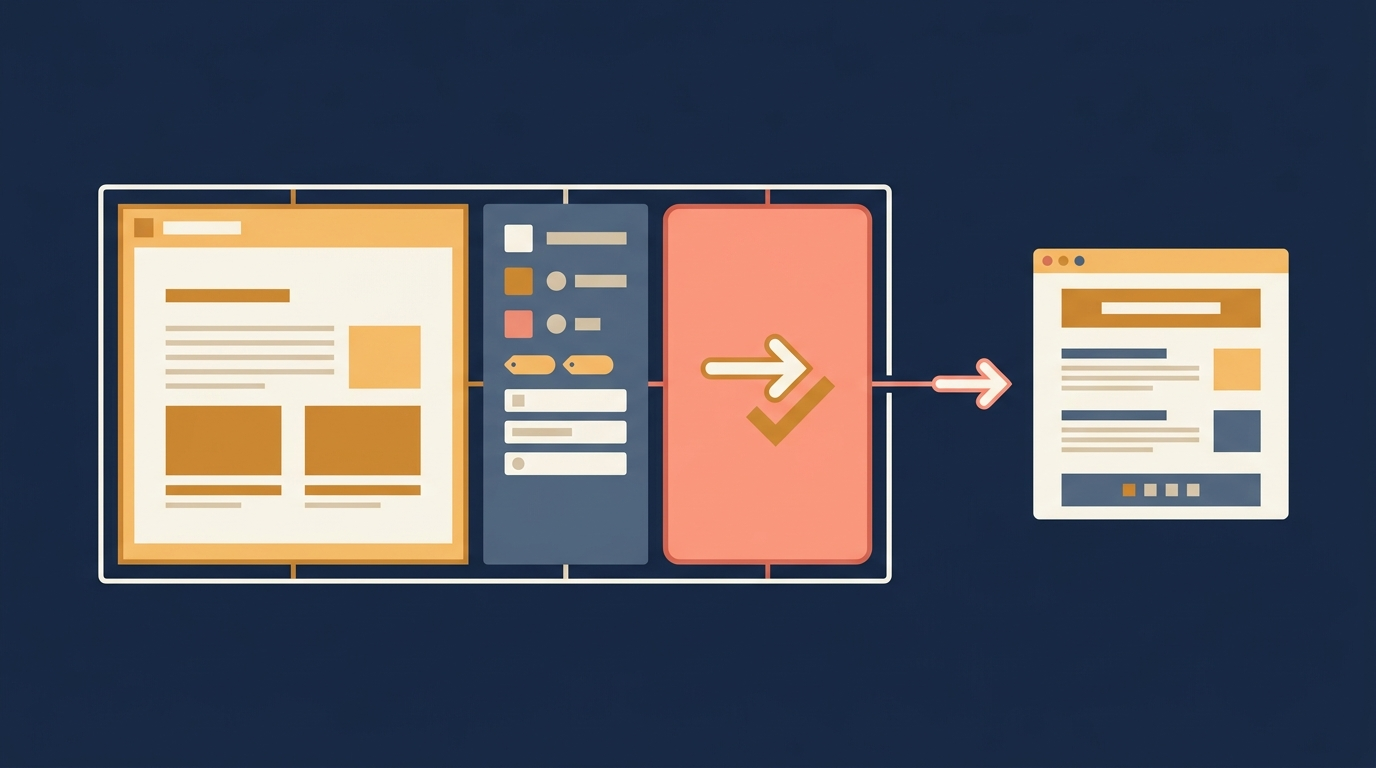
The biggest win is CMS wrangling. DraftSpring's Publish to Ghost integration removes the manual transfer step that usually creates friction. For a founder publishing four posts a month, saving even 15 minutes of Ghost setup and cleanup per post adds up to about an hour back every month. More importantly, it removes the most annoying part of the process, which is often the part that causes delay.
That's the heart of Ghost publishing automation when it's done well. Not "AI wrote your post." Plenty of tools can do that. The useful part is closing the gap between a finished draft and a live article without making you babysit the CMS.
There's also a softer benefit that matters just as much: confidence. DraftSpring works as a staging area for the final review. Because the article, structure, SEO fields, and publishing step are all in one place, the last check feels controlled instead of chaotic. You can review the piece as a complete package, not as scattered parts across five tabs.
For solo founders and small teams, that changes behavior. A messy workflow creates hesitation. A clean end-to-end workflow makes publishing feel routine.
That's why DraftSpring fits this problem so directly. It's a publishing command center for Ghost, not just a drafting assistant. It handles formatting, metadata, and CMS friction in one environment, which is exactly what the ai writing last mile demands.
If you already use ChatGPT or Claude and still struggle to publish consistently, the missing piece probably isn't better generation. It's a system that turns generated text into scheduled posts without operational drag. DraftSpring is purpose-built for that.
Your Next Breakthrough Isn't a Better Draft—It's a Better System
The AI writing revolution solved one problem and exposed another. Drafts are easy now. Publishing is not.
That's why so many founders feel oddly stuck despite having more content than ever. They're optimizing the part of the workflow that's already fast and underinvesting in the part that actually blocks output. Chasing a slightly better draft is a small win. Fixing the last-mile workflow is the real multiplier.
The goal is simple: publishing should feel almost as easy as drafting. That doesn't happen because your prompts get fancier. It happens because your system handles formatting, metadata, review, and Ghost publishing in a way that doesn't require fresh effort every single time.
So do one practical thing this week. Take your last three unpublished drafts and map the exact steps between "text exists" and "post is live." Count the handoffs, the tools, and the delays. That's your real bottleneck.
Then fix that bottleneck with a pipeline.
Stop letting strong ideas die in a drafts folder. Stop confusing content generation with content publishing. Build a workflow that gets posts over the line, and if you publish on Ghost, use a tool built for that last mile. DraftSpring is a good place to start.